

THE ARGUMENT IN BRIEF
A retail media sales report cannot, on its own, establish incremental growth. Anil examines what holdouts and other experimental designs can reveal about the sales that advertising actually caused.
In the rapidly evolving landscape of retail media, brands are investing heavily in advertising across various platforms. Retail Media Networks (RMNs) have emerged as powerful channels, offering brands direct access to consumers at the point of purchase. However, with this growth comes a critical question:
Are these advertising efforts truly driving incremental sales, or are the reported metrics painting a misleading picture?
The Pitfalls of RMN-Reported Metrics
While RMNs provide a wealth of data, several inherent flaws can lead to overestimated performance:
1 Attribution Overlap: RMNs often claim credit for sales that might have occurred without the specific ad exposure, leading to inflated performance metrics.
2 Absence of Control Groups: Without establishing control groups, it's challenging to discern whether observed sales were a direct result of the advertising campaign or if they would have happened organically.
3 Misleading ROAS Figures: By not accounting for baseline sales, the Return on Ad Spend (ROAS) can appear more favorable than it truly is, misguiding budget allocation decisions.
The Importance of Incrementality Testing
To navigate these challenges, brands must focus on measuring incrementality—the additional sales generated solely due to the advertising effort. Incrementality testing provides a clearer picture of a campaign's effectiveness by isolating its direct impact.
Geo-Based Holdout Testing: A Robust Approach
One effective method for assessing incrementality is geo-based holdout testing. This approach involves:
• Selecting Test and Control Regions: Identifying geographic areas with similar characteristics to serve as test and control groups.
• Pausing Campaigns in Test Regions: Temporarily halting specific marketing activities in the test regions to observe changes in performance metrics.
• Analyzing Results: Comparing data between test and control regions to determine the true incremental lift of the campaigns.
Case Study: Wayfair's Approach
Wayfair implemented geo-based holdout testing to evaluate the incrementality of its digital campaigns. They discovered that up to 30% of attributed sales were organic and would have occurred without the advertising spend. Adjusting their media mix based on these insights increased efficiency and reduced wasted ad spend by over 20%.
The Role of the Halo Effect
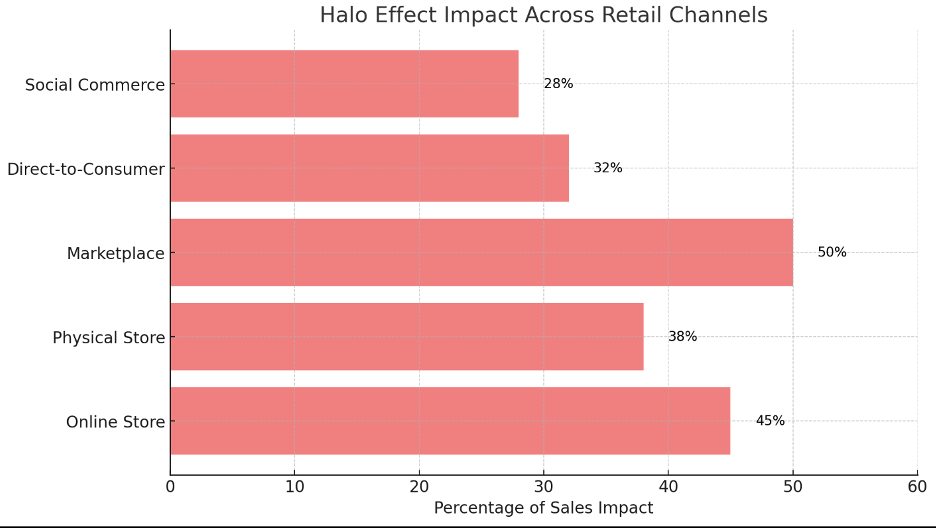
While geo-based holdouts measure direct incremental impact, the halo effect measures the indirect impact of advertising.
The halo effect refers to the phenomenon where advertising in one channel or retailer boosts sales in another channel or influences consumer behavior beyond the initial campaign objective.
Case Study: Co-op's Findings
A study by Co-op revealed that their retail media campaigns not only boosted in-store sales but also led to a 3% uplift in non-Co-op stores, indicating that brand perception and consideration were influenced beyond the direct point of sale.
Best Practices for Measuring the Halo Effect
1 Integrate Retail Media Data into Marketing Mix Models (MMM):
Include retail media as a standalone channel in your MMM.
Measure how it influences other channels (e.g., search, display, in-store).
2 Track Cross-Channel Engagement:
Use customer journey data to link ad exposure in one channel to conversions in another.
3 Use Clean Room-Based Data Matching:
Partner with platforms like Amazon Marketing Cloud (AMC) or LiveRamp to track cross-channel effects securely and anonymously.
4 Account for Time Lag:
The halo effect might not be immediate—test different lookback windows to identify the full impact.
5 Push for RMN Transparency:
Demand granular, cross-channel reporting from your retail media partners.
Case Study: Dunelm's Incrementality Measurement
Dunelm , a leading homewares retailer in the UK, sought to understand the true impact of their Facebook advertising campaigns. By conducting a randomized controlled experiment using Facebook's Conversion Lift tool, they discovered that prospecting campaigns yielded a 5.7x higher return than retargeting campaigns. This insight led them to reallocate budgets, resulting in a 90% increase in incremental Facebook ROAS.
Case Study: Bayer's Optimization for Incremental ROI
Bayer collaborated with Skai and Incremental to integrate incrementality measurement into their omnichannel platform. By optimizing for incremental Return on Investment (iROI) rather than traditional ROAS, Bayer improved its iROI by over 32%, achieving significant gains in media efficiency.
The Flaws in RMN-Reported Metrics
Most Retail Media Networks (RMNs) present highly favorable but fundamentally flawed performance reports.
Problem #1: Attribution Overlap
• RMNs frequently attribute sales to ads that had minimal or no real influence.
Problem #2: Lack of Control Groups
• Without control groups, it’s impossible to measure whether sales were driven by the ad or if they would have occurred anyway.
Problem #3: Misleading ROAS
• RMNs calculate ROAS based on total sales rather than incremental sales.
Problem #4: Invalid Traffic (IVT) Inclusion
• RMNs often fail to filter out bots and automated traffic, which inflates impression and conversion numbers.
Real-World Insight
A major CPG brand uncovered that only 40% of reported ad-driven sales from a leading RMN were truly incremental. After adjusting their reporting to focus on actual lift, their reported ROAS dropped from 5.2x to 2.1x—but overall profitability increased due to better budget allocation.
How Amazon DSP and AMC Are Changing the Game
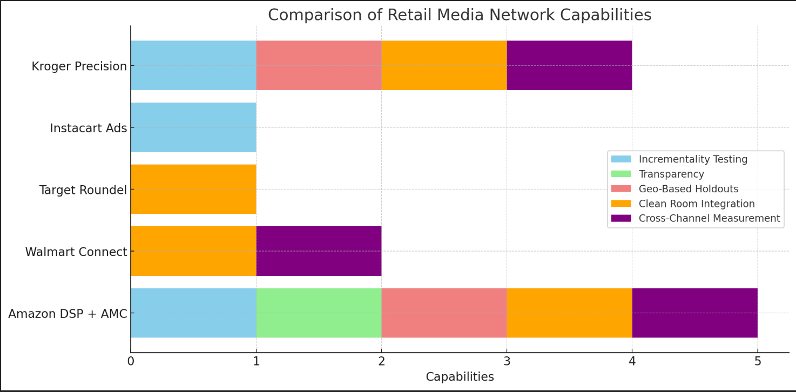
Amazon DSP (Demand-Side Platform) and AMC (Amazon Marketing Cloud) are setting the benchmark for transparency
Amazon DSP (Demand-Side Platform) and AMC (Amazon Marketing Cloud) are setting the benchmark for transparency and incrementality testing. Their approach integrates data, targeting, and measurement into a unified framework, offering deeper insights into the customer journey.
✅ Granular Cross-Channel Insights:
• AMC provides customer-level, event-level reporting, allowing brands to analyze the full customer journey.
• Brands can see how display ads influence search behavior and purchase decisions.
• AMC enables the tracking of customer exposure across multiple touchpoints (e.g., display, search, video) and links it to actual conversion outcomes.
✅ Geo-Based Holdouts:
• Amazon DSP enables geo-based holdout tests at scale.
• This allows brands to separate organic and ad-driven sales.
• Amazon’s deep integration of retail and advertising data gives it an advantage in identifying true incremental lift.
✅ Data Matching via Clean Rooms:
• AMC allows brands to match first-party data with Amazon’s platform data in a privacy-compliant environment.
• This unlocks cross-channel measurement without exposing customer-level data.
Example: A CPG brand used Amazon DSP’s geo-based holdouts to isolate ad-driven sales from organic sales. They discovered that only 60% of reported lift was incremental, allowing them to adjust bidding strategies and improve efficiency by over 25%.
Comparing Amazon's Model to Other RMNs
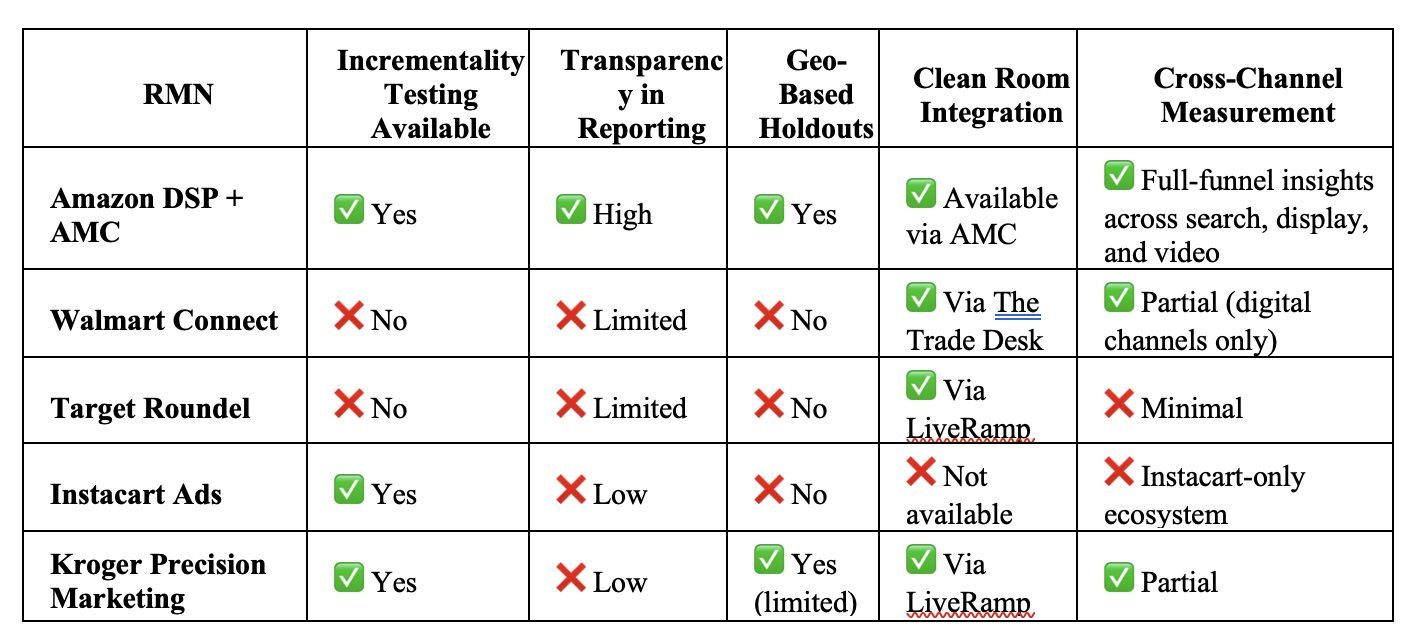
Insight:
• Amazon stands out due to its integration of retail and ad ecosystem, whereas other RMNs often work in silos.
• Most RMNs lack geo-based holdout capability, relying on directional data rather than true incrementality.
Data: How RMNs are Failing on Incrementality
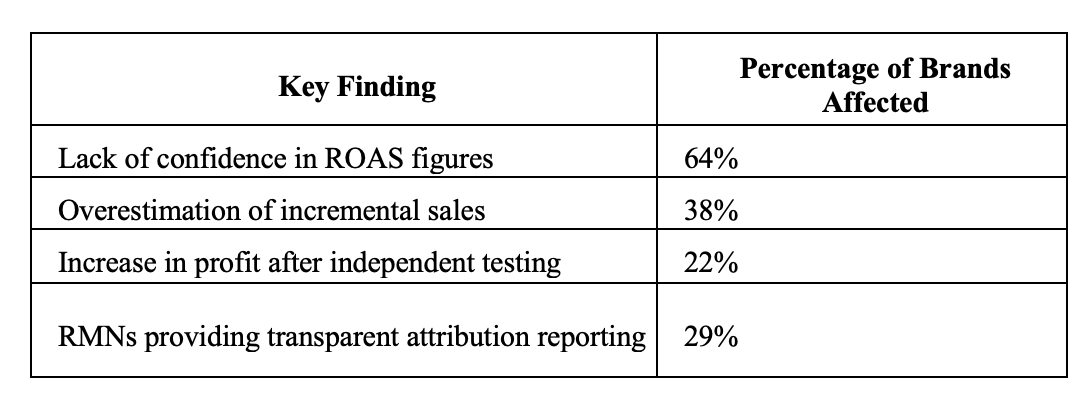
A recent study by Circana found that:
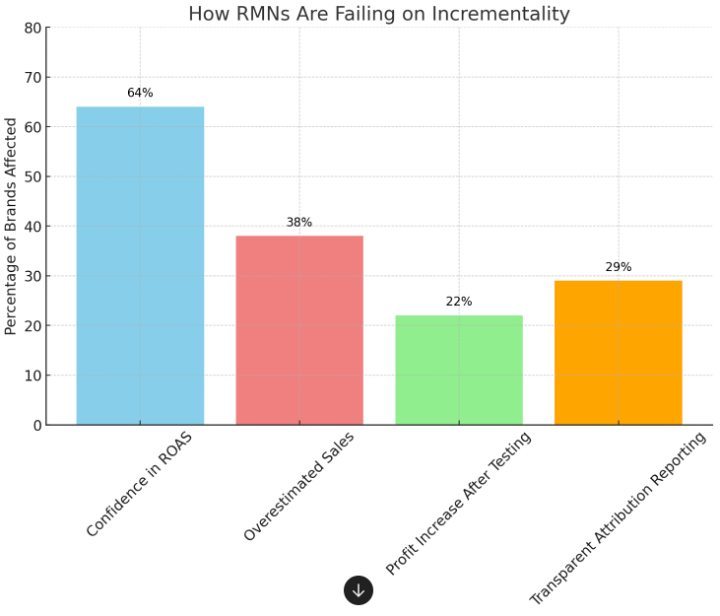
• 64% of brands using RMNs are not confident in reported ROAS figures.
• 38% of RMN-reported sales were found to be organic or influenced by non-advertising factors.
• Brands that implemented independent incrementality testing saw an average increase in profit margins by 22%.
• Only 29% of RMNs provide detailed, transparent reporting on attribution windows and halo effects.
How Developed Markets Are Approaching Incrementality
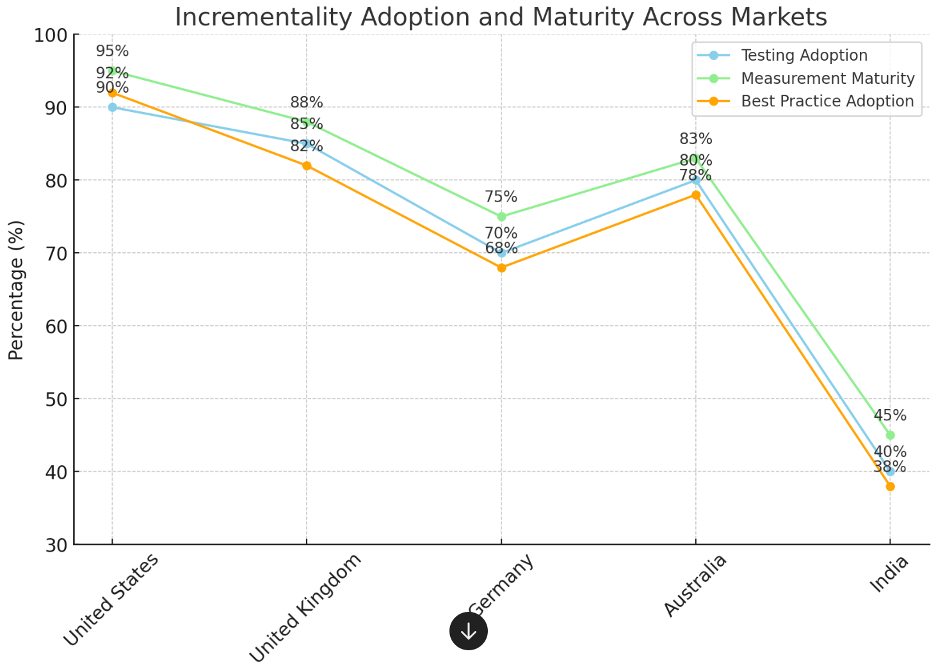
Insights from Developed Markets:
• Germany: Discounters like Lidl and Aldi are investing in audience segmentation and closed-loop measurement.
• Australia: Retailers like Woolworths and Coles are exploring geo-based testing at scale.
• India: Still in early stages — heavy reliance on last-click attribution and RMN-reported lift.
How Amazon’s Incrementality Model Outperforms Competitors
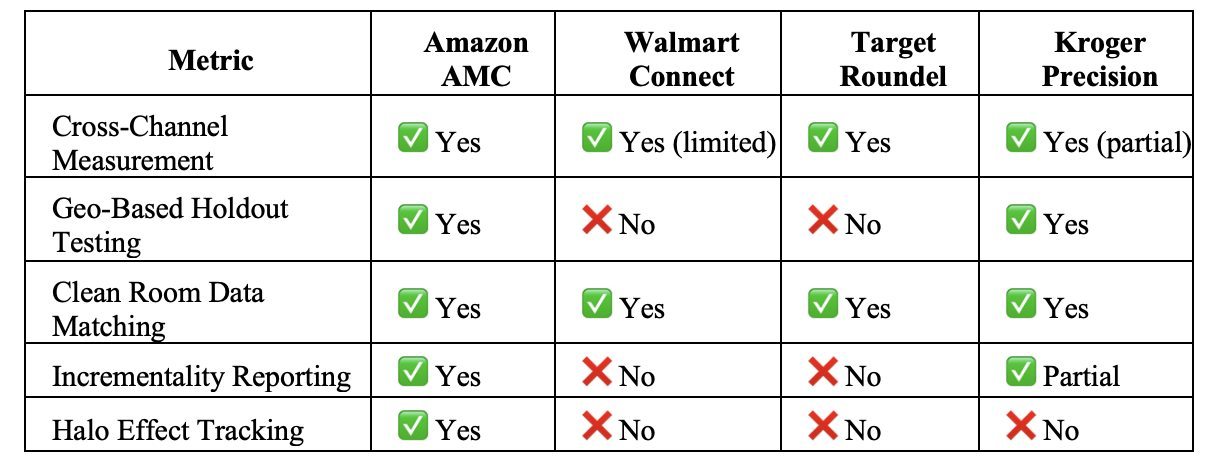
Takeaway:
• Amazon's competitive advantage lies in its ability to combine customer-level data, clean rooms, and geo-based testing into a unified measurement framework.
• Most RMNs remain focused on directional lift rather than true incrementality.
Best Practices for Clean Incrementality Testing
1. Use Independent Third-Party Validation
• Partner with companies like DoubleVerify, LiveRamp, or Nielsen to audit RMN reports.
• Ensure the methodology aligns with MRC (Media Rating Council) guidelines.
2. Demand Transparent Reporting
• Require RMNs to disclose:
◦ Control group structures
◦ Attribution models
◦ Incrementality testing methods
◦ Any traffic filtering techniques (e.g., invalid traffic)
3. Shift to Incrementality-Based Bidding
• Optimize campaigns based on incremental ROAS rather than total ROAS.
• Focus on actual lift rather than inflated conversion data.
4. Expand Beyond Last-Click Attribution
• Incorporate Marketing Mix Models (MMM) to assess full-funnel impact.
• Measure multi-touch influence (e.g., how search, display, and video interact).
5. Integrate First-Party Data with Clean Rooms
• Use platforms like Amazon Marketing Cloud or LiveRamp for customer-level data integration.
• Build a unified view of customer behavior across platforms.
What Success Looks Like
✅ Higher profit margins due to better budget allocation
✅ Improved understanding of customer behavior
✅ More accurate ROAS reporting
✅ Less reliance on inflated RMN data
✅ Consistent growth across multiple channels
Conclusion
The future of retail media measurement lies in incrementality—not just reported ROAS or click-through rates.
Brands that embrace geo-based holdout testing, clean room-based data matching, and the halo effect will unlock the true value of their advertising spend.
The question is no longer "Are my ads working?" — the question is "How much more could I drive if I measured it correctly?"
It’s time to move beyond surface-level metrics.
It’s time to measure what matters.
Anil Pandit
Executive Vice President
Publicis Media, India
*Disclaimer: This post is for informational purposes only and does not endorse or disapprove of any specific tools, platforms, or technologies. The views and opinions expressed in this article are those of the author and do not reflect the official policy or position of the company he is employed in.
References:
1 Circana – Study on how RMNs overestimate sales and the impact of flawed incrementality measurement.
2 Emarketer – Insights on global retail media spend, incrementality, and halo effect influence.
3 Skai – Case study on Bayer’s use of incrementality measurement and optimization for iROI.
4 Funnel.io – Explanation of geo-based holdout testing and why it’s the gold standard.
5 Provalytics – Research on the halo effect and how it influences cross-channel sales.
6 Segmentstream – Methodology for setting up and executing geo-based holdout tests.
7 Wayfair – Case study on how geo-based holdouts revealed inflated ROAS and improved efficiency.
8 Co-op – Case study on how retail media campaigns created cross-channel lift through the halo effect.
9 Dunelm – Facebook Conversion Lift case study highlighting the impact of true incrementality.
10 Crealytics – Research on incrementality testing and how iROI optimization improves efficiency.
FROM THE AUTHOR’S ARCHIVE
Original text from Anil Pandit’s article export. Claims and references reflect the time of writing.
Some original illustrations could not be recovered from the export’s image links.
View on LinkedIn ↗What does this mean for your business?
Bring the question into a focused advisory conversation.
Work with Anil ↗